Web design
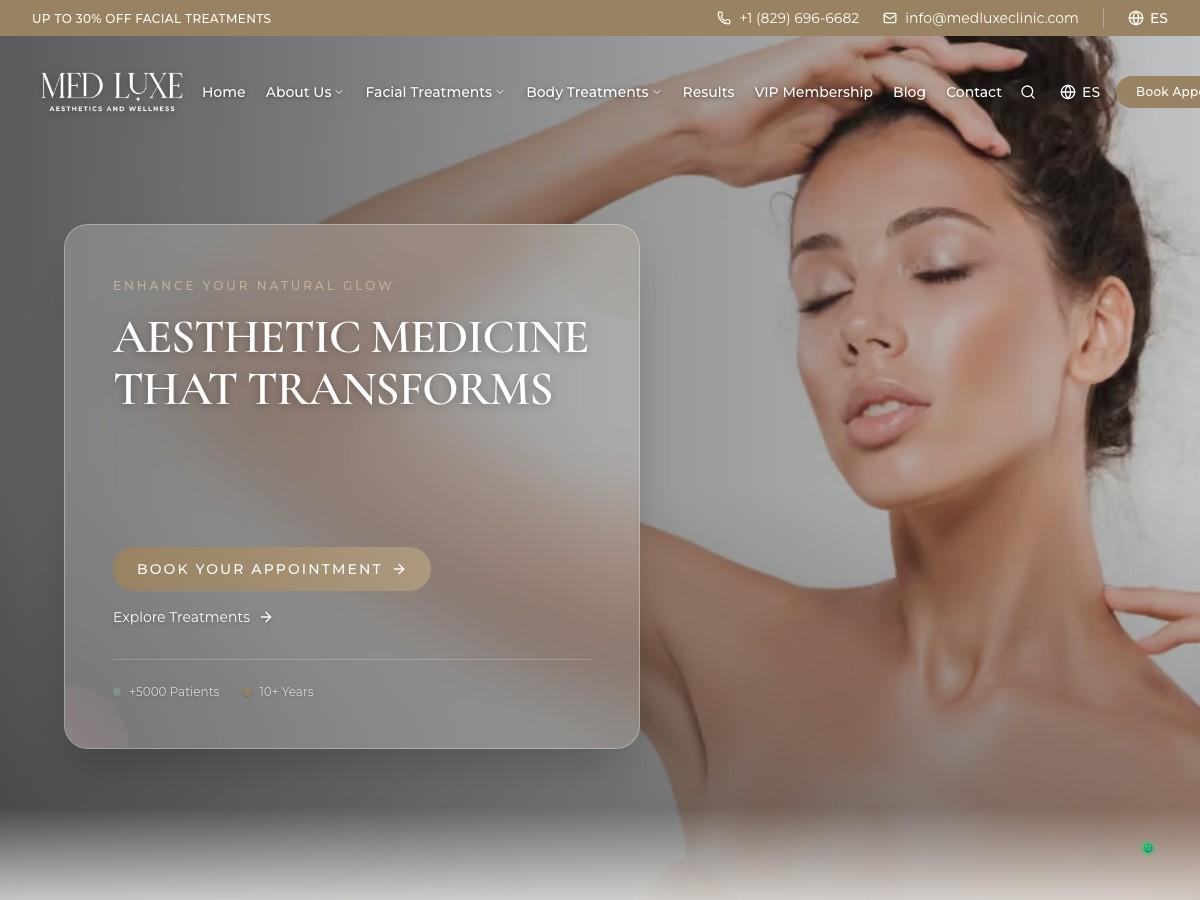
Med Luxe Aesthetics & Wellness
Website for an aesthetic medicine and wellness clinic, with appointment booking.
Visit the siteMedical practice website design
The patient looking for you wants three answers before calling: whether you treat what they have, whether you take their insurance, and when they can come in. We build the site around those three answers, with data handling decided from the start.
The short answer
Medical practice website design has to answer three questions before the call: what you treat, which insurance you accept, and when an appointment is available. It also has to handle patient data properly, which includes keeping third-party trackers away from where health information is collected. Henoc Marketing builds bilingual clinical sites from $997.
Last reviewed:
A patient looking for a provider usually compares several sites before calling. These are the reasons they leave yours.
It is one of the first questions and one that generates a lot of front-desk calls. An up-to-date list of accepted plans in text saves calls from people who cannot be patients and keeps the ones who can.
Many people look for a provider at night or on weekends, when they have time or when the symptom flares. If the only path is calling on Monday, you lose whoever found another practice that let them book right then.
No real biographies, no training, no years in practice, no languages spoken. In healthcare the decision is about a person, and a stock photo with a generic paragraph communicates exactly the opposite.
The most serious technical mistake: advertising pixels and analytics tools dropped without judgment onto intake forms, patient portals or pages with clinical information. It is a data-handling problem, not a design question, and it gets decided before any code.
The three answers first, aesthetics second. And data handling decided before the first line of code.
What you treat, which insurance you accept and how to book, visible without scrolling and in both languages. With medical schema so Google and AI assistants can answer it too.
With the practice management system you already use, as long as it offers an integration. Automatic confirmation and reminders, which is the direct lever against no-shows.
Marketing pages and areas where patient information is collected are treated differently, with different tracking and vendor rules. It is an architecture decision, which is why it gets made up front.
Built for practices that want a full calendar without adding front-desk work.
Each procedure or condition with its own page, in the patient's language rather than the textbook's.
In text, editable by your team when contracts change.
Integrated with your system, with automatic reminders.
Training, board certifications, languages and a real photo, with Physician schema.
What gets measured, where and with which vendor, documented for your compliance officer.
Written by people and included at no extra cost. In healthcare a bad translation is not a style detail.
Contrast, keyboard navigation and alt text. Many patients genuinely need it.
Automatic reminders and rescheduling with an AI agent.
Three concrete reasons, and one warning about what we are not.
Med Luxe Aesthetics & Wellness: a site for an aesthetic medicine and wellness clinic, with appointment booking. You can see it live, with their permission, below.
The founder has more than 20 years in technology, cybersecurity and cloud. On a clinical site that is the difference between putting the pixel where it belongs and putting it where it creates a problem nobody finds until an audit.
A mistranslated symptom changes what the patient understands you treat. We write both versions and research keywords separately, because people do not describe their symptom with the same term in both languages.
No web agency can certify a site as "HIPAA compliant": that certification does not exist. What we do is build with the right technical decisions, document what each tool collects and where, and hand that to your compliance officer to validate. When HIPAA applies, we sign a BAA.
The standard process takes four weeks: strategy and content in week 1, design and development in weeks 2 and 3, launch and training in week 4. Integrations and content reviews can stretch it, and the delivery date goes in writing in the quote.
Specialties, insurance, practice management system and how booking works today. A documented decision on what gets measured and where.
Week 1
Services and biographies in both languages, reviewed by the clinical team, plus development, online booking, medical schema and accessibility testing.
Weeks 2-3
Go live, per-channel appointment tracking and handover of the tracking documentation.
Week 4
Each attracts a different kind of search and needs its own structure.
Procedure searches and a decision heavily driven by reviews.
Insurance and "near me" searches, with a quick decision.
Heavy local competition, after-hours emergencies and financing plans.
Where form and tracking privacy matter more than anywhere else.
The border between aesthetics and healthcare, with direct booking.
Booking and reminder agents for your Orlando clinic.
Our published prices for the site. What moves the number most is the number of specialties and providers, and the online booking integration.
From $997
1-3 pages, bilingual EN/ES
From $2,497
Up to 8 pages, bilingual EN/ES
From $4,497
9+ pages or integrations
From $1,997
With redirects so you keep your Google rankings
$147/mo
Hosting, SSL, backups, security monitoring and 1 hour of changes a month
If the site has to collect or handle patient health information and HIPAA applies, that part has no published price: it is quoted, and we sign a BAA when HIPAA applies.
Care plan (maintenance) is monthly: 6-month minimum, then month-to-month with 30 days' notice. If you cancel within the first 30 days, we refund your first monthly fee (setup, ad spend and usage are non-refundable).
A live site shown with the client’s permission. We show what is visible on the live site, with no results figures.
Web design
Website for an aesthetic medicine and wellness clinic, with appointment booking.
Visit the siteWe operate out of Orlando, Florida, serving Central Florida on site and the rest of the United States remotely. What working here adds is concrete: many Central Florida patients look for a provider in Spanish and many in English. That forces you to understand that a symptom search in Spanish is not a translation of the English term, and that difference decides which practice shows up.
Thirty minutes to look at your site, your booking system and which measurement tools are installed, and where. You leave with a written quote or a fix list.